

en

Olga Ravn

Olga Ravn is a Danish poet and novelist. She is known for her poetry and the novel The Employees (2020).

Olga Ravn was born in Copenhagen. She is the daughter of singer Anne Dorte Michelsen and artist Peter Ravn. Olga attended the Danish Writers' School and graduated in 2010.

Ravn published her first poem in the literary magazine Hvedekorn in 2008. Her poems later appeared in Konvolut 28/6, Trappe Tusind and other Danish publications. In 2012, she published her first volume of poetry, Jeg æder mig selv som lyng. The book explores themes such as youth, love and the body. Critics described it as "a passionate, lyrical collection about breaking free from the role of a young girl". A Swedish translation was published in 2013.

In 2014, Ravn published Mean Girl, a chapbook of poems featuring coloured leaves and shimmering scraps. Each book was unique, and it was limited to 250 copies. In 2015, a Norwegian selection of the book was published.

Ravn edited the 2015 book Jeg ville være enke, og jeg ville være digter, a collection of forgotten texts by Tove Ditlevsen. In the same year, she published her first novel, Celestine. The book is about a boarding school teacher obsessed with a ghost. Critics praised Ravn's language, with one reviewer writing: "She can do so much with words.

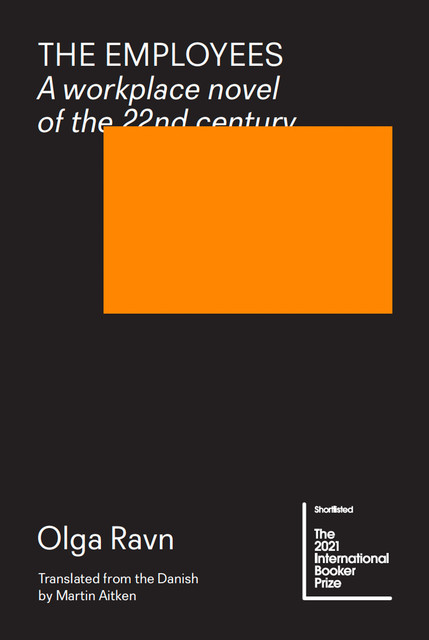
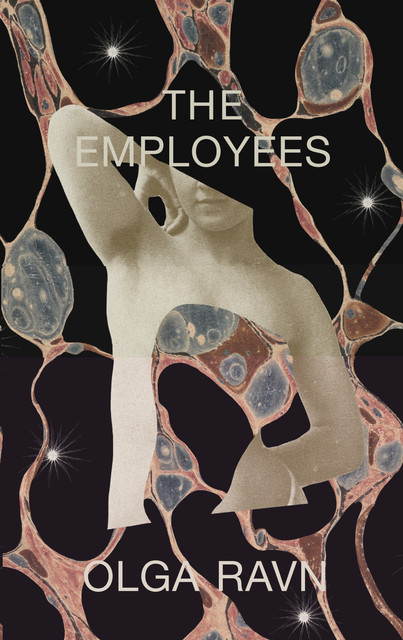
Her second novel, The Employees, was published in 2020. Set on a spaceship, it explores work, identity, and human connection. In an interview, Ravn described it as "a novel about trying to stay hard but gradually revealing yourself to be the softest material." The book has been shortlisted for the 2021 International Booker Prize and the 2022 Ursula K. Le Guin Prize.

Ravn has won several awards. In 2019, she won the Beatrice Prize. She has been shortlisted for the Warwick Prize for Women in Translation and the National Book Award for Translated Literature. In 2023, her novel My Work was a finalist for the Cercador Prize for Literature in Translation.

Olga Ravn works as a writing teacher at Testrup Højskole and as an editor at Gyldendal. She also writes literary criticism for Politiken and publishes short texts and videos online.

Photo credit: X @OlgaRavn
years of life: 27 rujna 1986 – present

Citati

finalfadeoutje citiralaprije 2 godine
STATEMENT 097
You want to know what I think about this arrangement? I think you look down on me. The way I see it, you’re a family that’s built a house. And from the warm rooms of that house you now look out at the pouring rain. Safe from menace, you delight at the rain. You’re dry and snug. You’re reaping the rewards of a long process of refinement. When the storm gets up, it only heightens your enjoyment. I’m standing in the rain you think can never fall on you. I become one with that rain. I’m the storm you shelter from. This entire house is something you built just to avoid me. So don’t come to me and say I play no part in human lives.

Zeeje citiralaprije 9 mjeseci
All of us here are condemned to a dream of romantic love, even though no one I know loves in that way, or lives that kind of a life.
Zeeje citiralaprije 9 mjeseci
I live, the way numbers live, and the stars; the way tanned hide ripped from the belly of an animal lives, and nylon rope; the way any object lives, in communion with others.

Dojmovi

Zeeje podijelio/la dojamprije 9 mjeseci
🔮Složena
💡Poučna

This book is strange in the best way possible. It was unexpectedly thought provoking and psychologically unnerving. What was initially portrayed as a series of statements and firsthand accounts, gradually reveals layers of philosophical and existential inquiry that persists long after the final page. Its unconventional format was also a pleasant surprise, suitably complementing the book’s theme and pushed for a more contemplative reading experience.

This collection of statements delves into the subject of existentialism and corporate objectification, all beneath the overarching question of what it truly means to be human. The interplay between the human workers and their humanoid counterparts forms a striking allegory and criticism for real-world corporate culture and its growing attitudes towards artificial/machine-driven intelligence.

Ultimately, the story’s ambiguity and surrealism left me feeling slightly unmoored. In lieu of offering clarity, it invites more uncertainty, leaving me with more questions than conclusions. Or possibly this was deliberate. I may not yet have the philosophical grounding or cognitive bandwidth to fully grapple with its less direct implications, but perhaps the answers will become apparent with time—it may be that the act of questioning is the point.

  • nedostupno
    Olga Ravn
    The Employees
    • 1
    • 13
    • 1
    en
  • fb2epub
    Povucite i ispustite datoteke (ne više od 5 odjednom)